
Reborn, like the bay laurel tree: Defne Women’s Cooperative
How a clothing-shop owner who “had nothing to do with farming” rebuilt Hatay's first women's cooperative from near-collapse and rubble, and turned an ancient olive, a bay-tree myth and the women around her into a business
Nesrin Deli will tell you, plainly, that she never meant to do any of this. For twenty-three years she ran a clothing shop in Antakya. She had no background in farming and no plan to lead a cooperative. "Tarımla hiçbir ilgim yok," she says: I have nothing to do with agriculture. So when the village women of Yeşilpınar were too afraid to put their names to the founding papers in 2014, she signed instead. "Hasbelkader kurucu ortağı oldum": I became a founding partner almost by accident.
That accident became a calling.
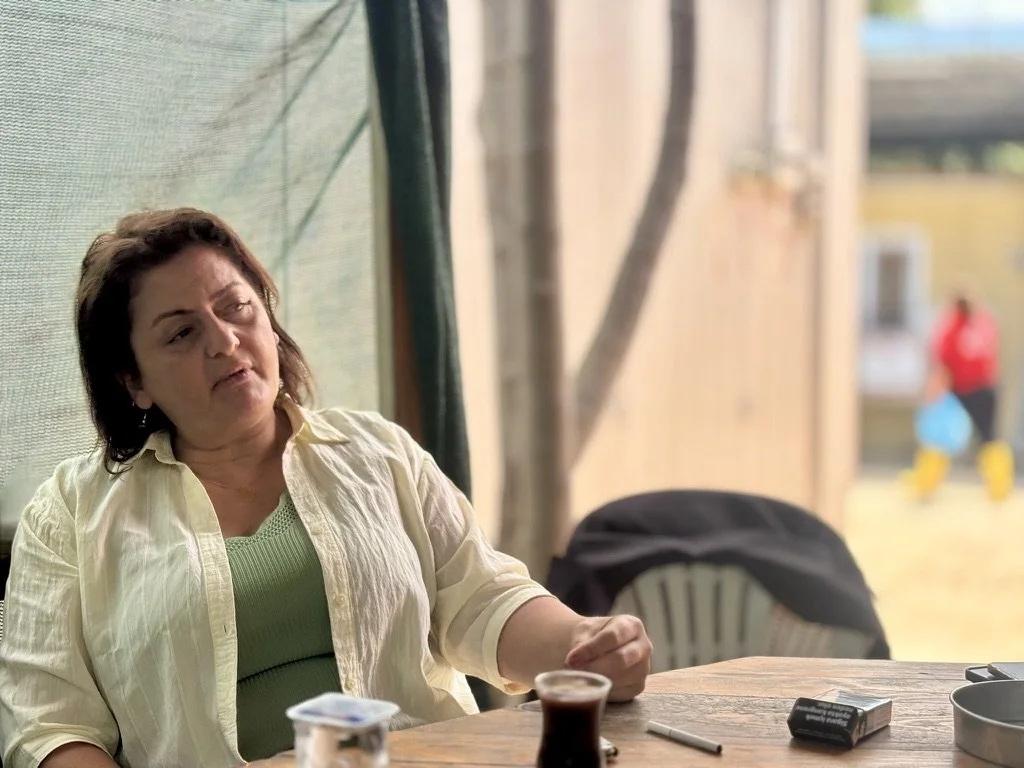
Nesrin Deli in Defne Women’s Cooperative arbor - where most of the daily discussions and decision-making take place
A district that lost its memory
Defne sits just south of Antakya, in Hatay, a border province at Türkiye's southern edge, layered for millennia with diverse cultures and ways of life. It is bay-tree country in the most literal sense: the district takes its name from defne, the bay leaf, and from the myth of Daphne, the nymph who, fleeing Apollo, was turned into a bay tree at the waterfalls of Harbiye. The scent of the leaves, they say, is her hair; the black berries, her eyes.
Then, on the morning of 6 February 2023, the earthquakes brought it all down. Nesrin's shop collapsed with the city. More than three years on, Antakya is still full of empty plots and half-waiting neighbourhoods. But for the cooperative, the deepest loss was the hardest to photograph. "Biz gerçekten hafızayı kaybettik," Nesrin says: we truly lost our memory. Recipes, records, heritage seed, her own years of research notes: gone. So part of rebuilding, for them, has meant remembering.
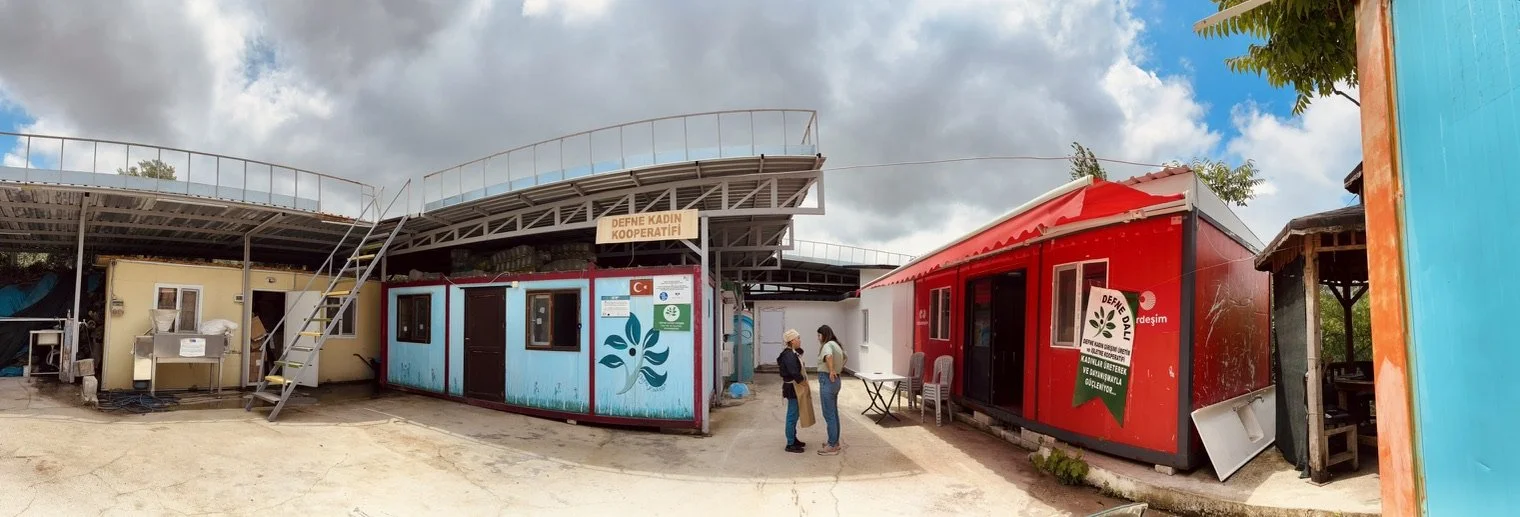
Panorama of Defne Women’s Cooperative’s location and prefab and container buildings.
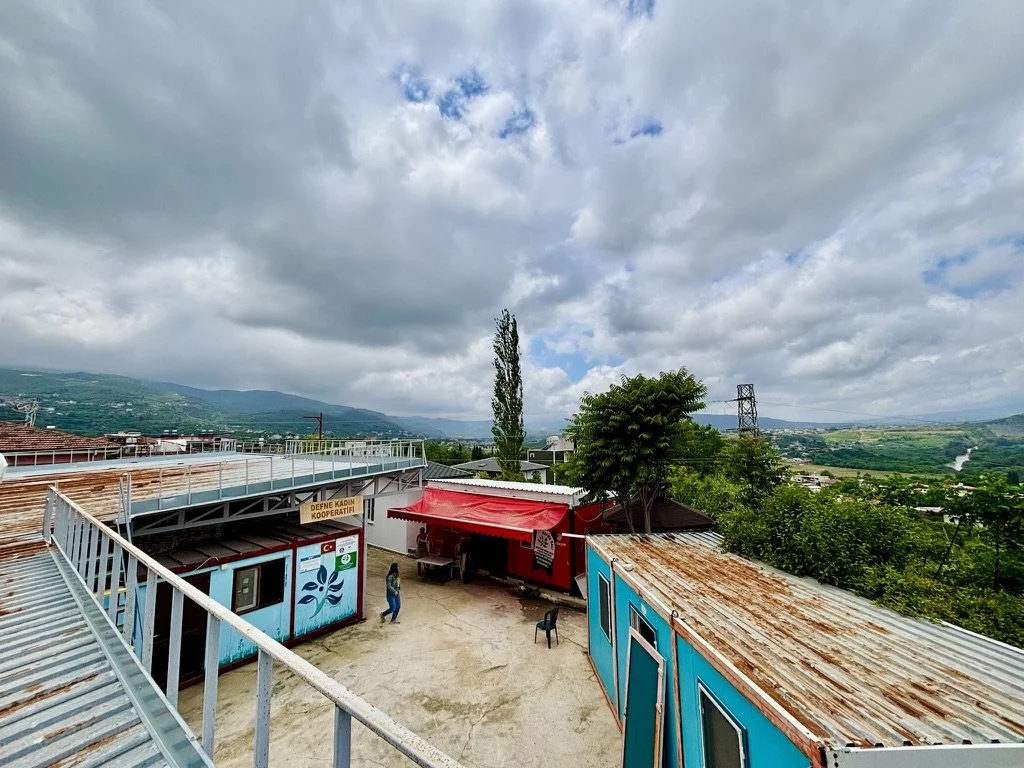
View from above of Defne Women’s Cooperative in Defne, Hatay
From six women to thirty-four partners
The roots reach back to 2010, when a teacher newly arrived from Ankara began gathering the women of Yeşilpınar. By 2012 they had formed a village women's association and met KEDV, the Foundation for the Support of Women's Work; Sabancı Vakfı came in behind them. In 2014, at KEDV's urging, half of them took the leap and founded a cooperative, the first women's cooperative in Hatay.
It almost didn't survive. The cooperative came into Nesrin's hands already buried in hidden debts (unpaid taxes, electricity, wages, raw materials) and had shrunk to just six members. She took it on as a trust, cleared the books herself, and spent the next five years paying them down. "Gün gelecek devran dönecek," she told herself: the day will come when the wheel turns. "Burası bu ülkede noktayla gösterilecek": this place will be a point on the map of this country.
And then the women rebuilt it. From those six, they grew back to twenty-six in a single general assembly, and to thirty-four partners today, working alongside some sixty-six contracted farmers under fair, pesticide-free agreements. Here is the part Nesrin insists on: this is shared work, farmers included. "Kooperatifçilik kolektif iştir, ortak iştir," she says: cooperativism is collective work, shared work. That, to her, is what separates a cooperative from a company.
“Para biriktirmek için değil; çiftçiyi ve kadını güçlendirmek için çalışıyoruz.” — We’re not here to stockpile money; we’re here to strengthen farmers and women. — Nesrin Deli
And when the earthquakes struck, the women did not stop: production carried on and the cooperative's garden became an aid hub, feeding neighbours while the city (and the cooperative itself) was still grieving its own.
What carried them through was each other. In the months that followed, the cooperative became less a workplace than a way of staying together: women checking on women, sharing what little there was, keeping a hand on the next person so that no one was left to face it alone. That is the cooperative's true purpose, and Nesrin puts it plainly: not to lift one woman, but to lift many, together. It means working with the women others overlook, and making their work, and their names, impossible to ignore.
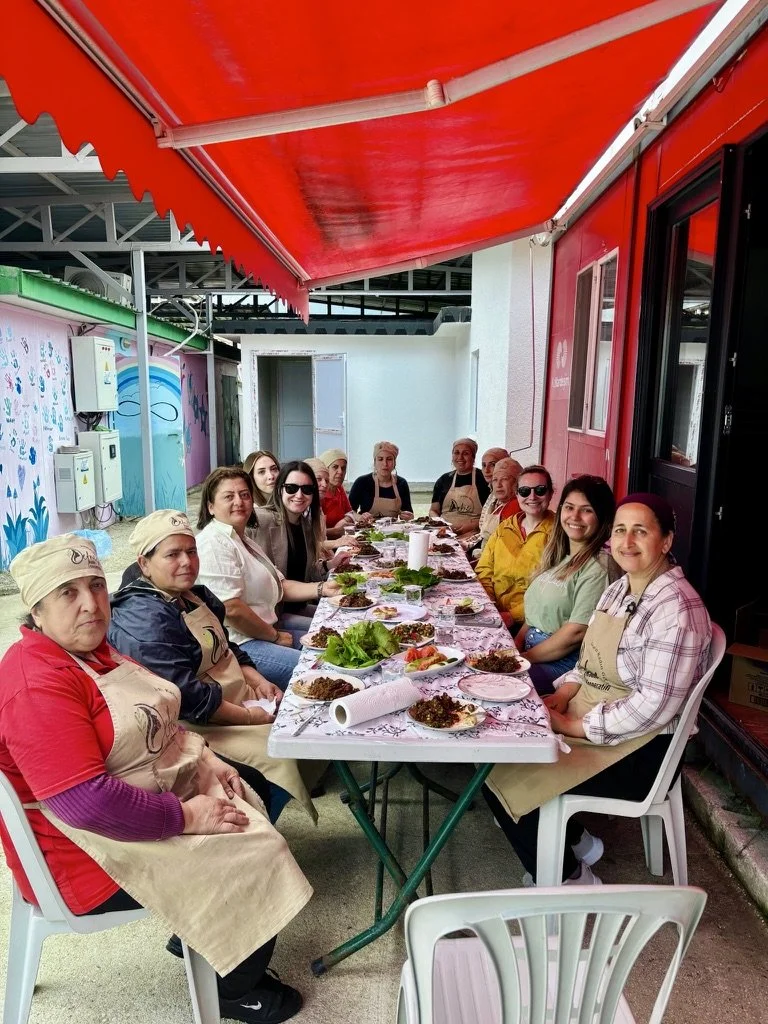
The women of Defne Women’s Cooperative hosting us for lunch.
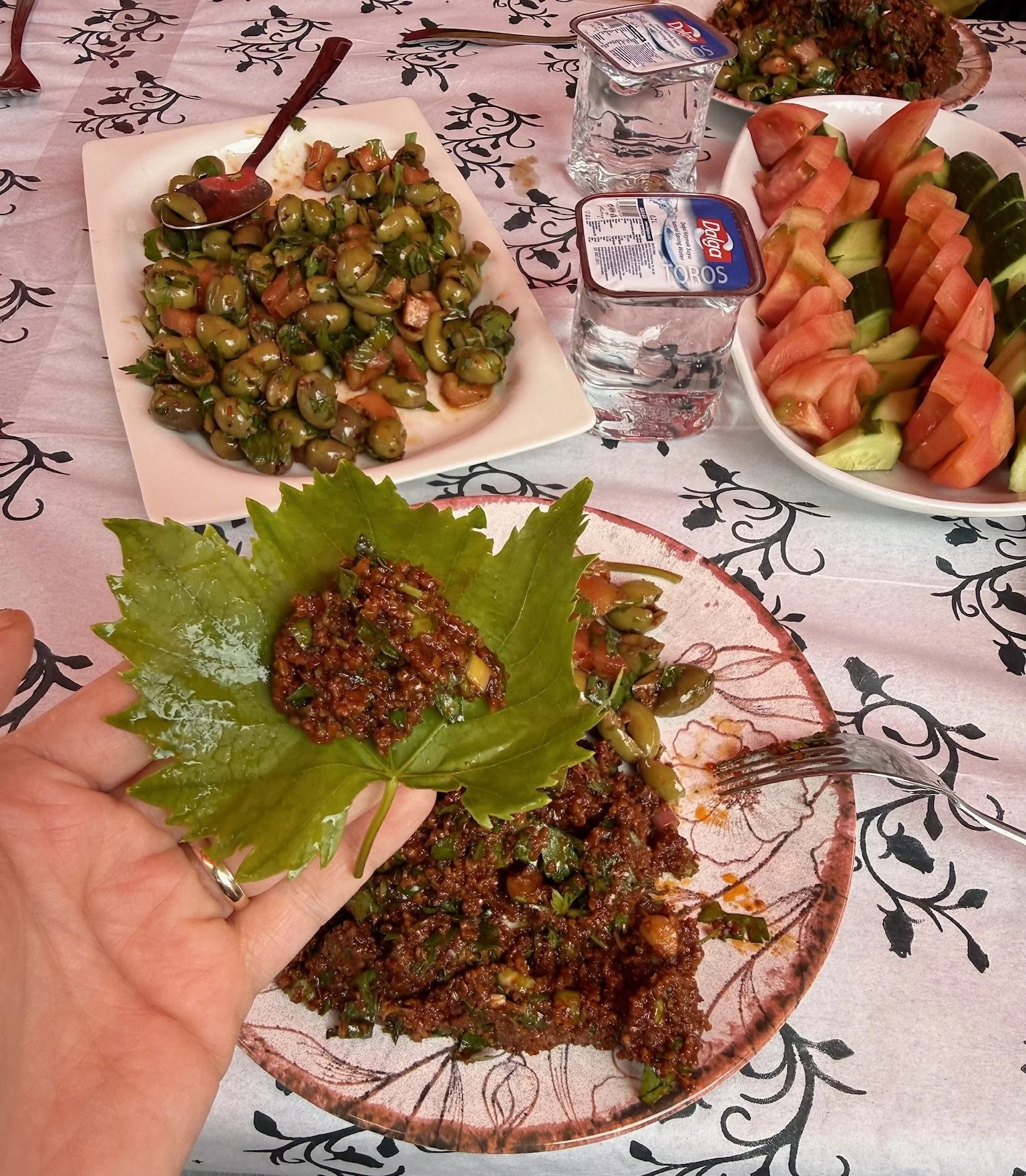
Hatay bulgur salad (Kısır) and freshly picked vine leaves for lunch. The kısır is mixed with basil farmed from the region and pomegranate molasses that gives it rich dark colour differing from other versions of kısır across Türkiye
What they built
In 2019, Defne became the first women's cooperative in Türkiye to generate its own electricity: solar, now running on thirty-two panels that cut the monthly bill drastically. The logic reflects Nesrin’s philosophy: "Ödeyemiyorsan, satın alamıyorsan, üreteceksin." If you can't afford it, you make it yourself. Behind that sits a cold store, won years earlier through a direct-aid grant, that finally let them keep produce instead of dumping it.
The range is rooted in Hatay's land and kitchen, built on a zero-waste model where orange peels become soap and fruit offcuts become powders for new products. At its heart is the Halhalı olive, pesticide-free, grown on trees whose youngest are a hundred years old, surviving almost nowhere but Hatay, and now carrying geographical-indication status. Around it: cold-pressed olive oil, pomegranate molasses, dried fruit, wild herbs, and a GI bay-leaf soap that carries Daphne's story on its label. Some of the range is itself an act of remembering: a wild-fig jam (a nearly-forgotten Hatay product the women brought back to shelves) and granola and bulgur from black-awn kara kılçık wheat. Other products look forward, like Limon Tatlısı, a lemon dessert of Nesrin's own invention, found nowhere else in Türkiye. And it all leaves the facility in glass and eco-friendly packaging only. They won't put their label on plastic. Increasingly, the day-to-day is led by younger women.
"Geride kimseyi bırakmamayı öğrendim." — I learned not to leave anyone behind. — Nahide Mirioğlu, one of the cooperative's younger members
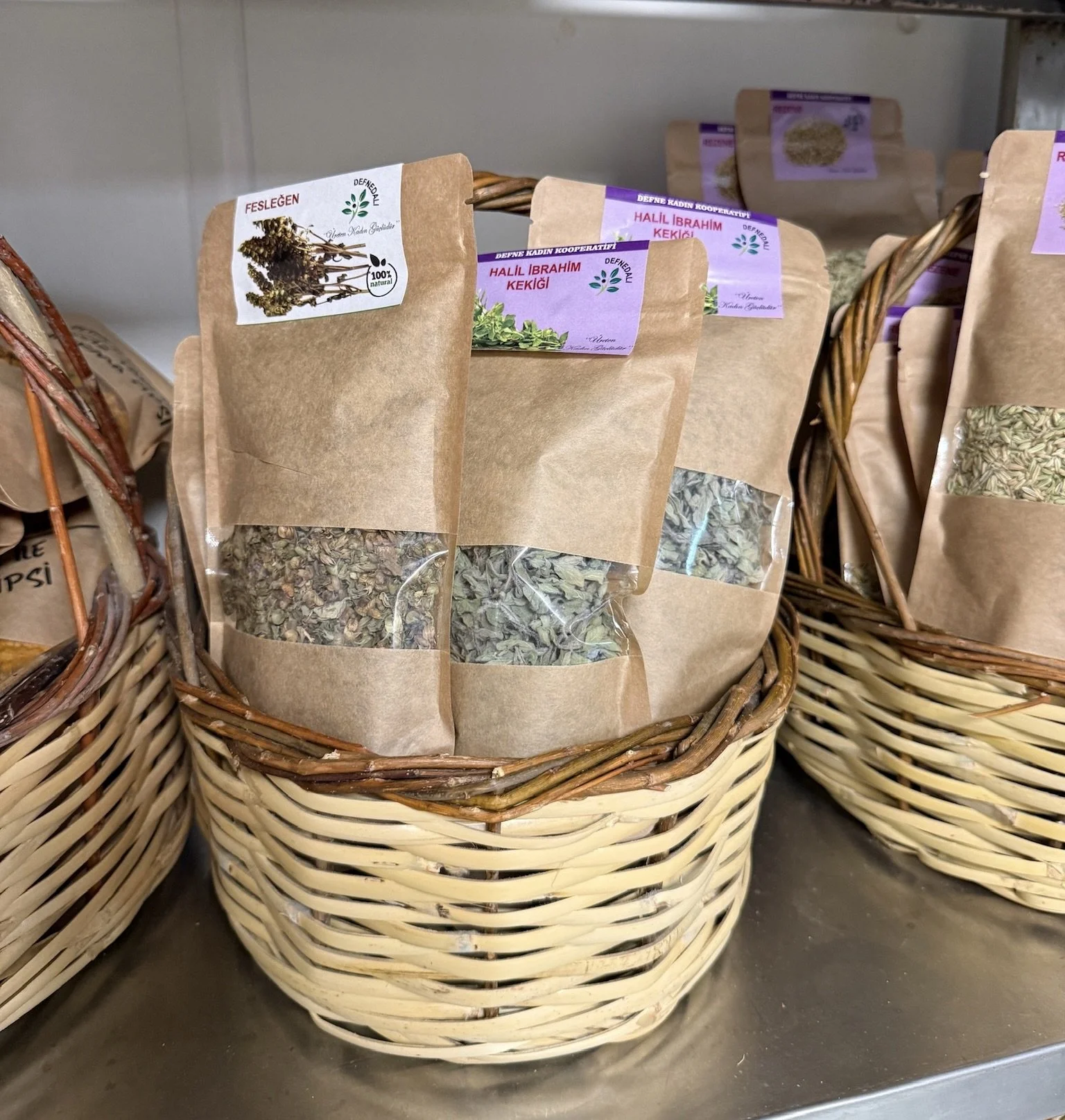
A variety of dried herbs on display
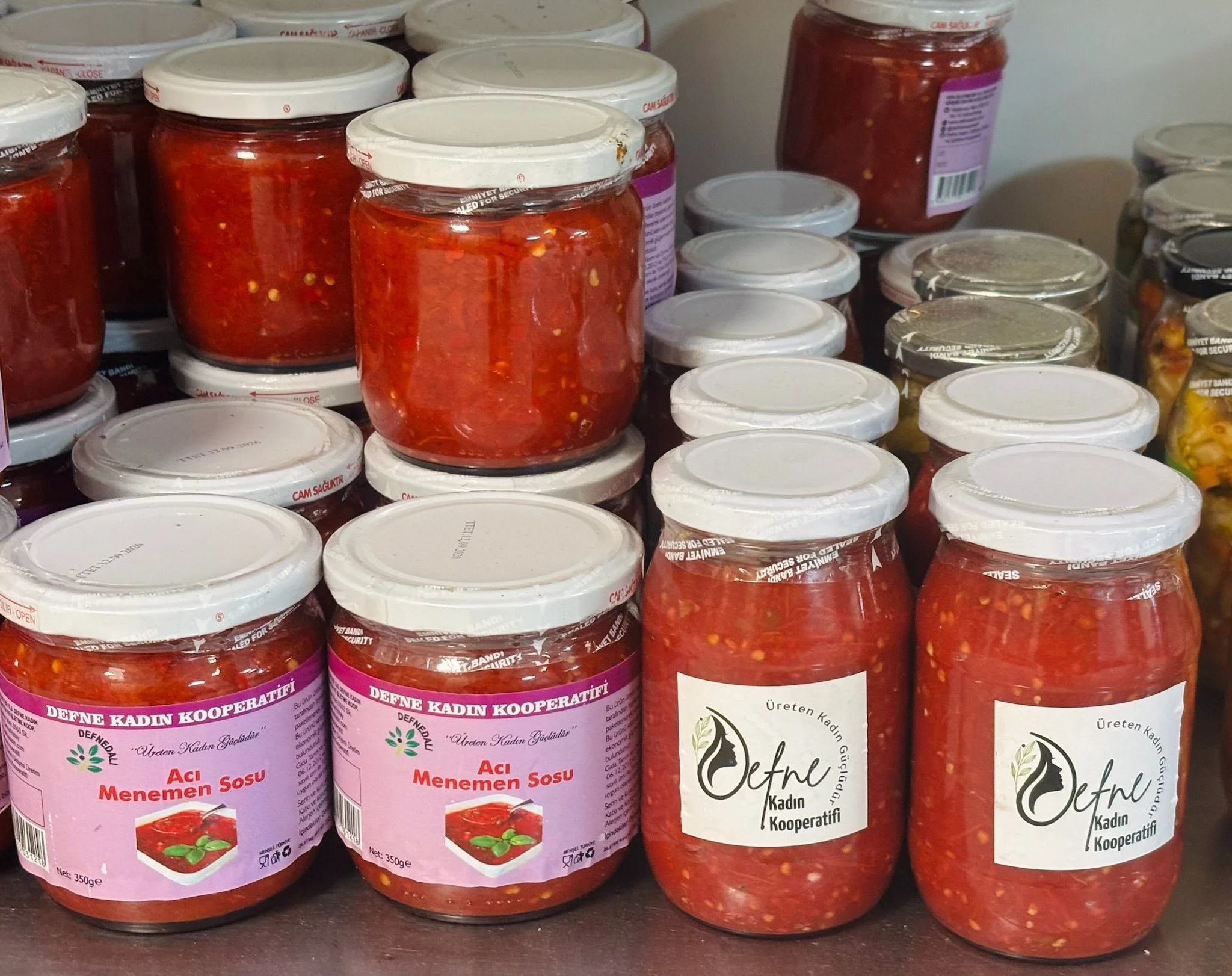
Breakfast sauces and chopped tomatoes on display
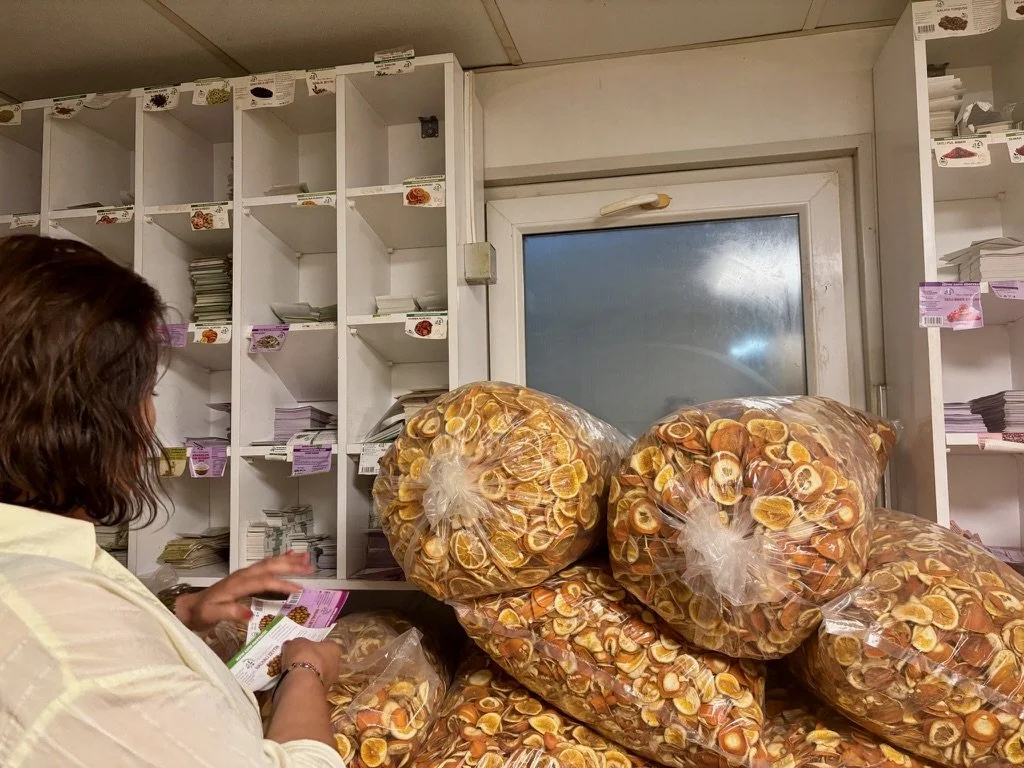
Nesrin Deli taking a look at the packaging next to dried oranges ready to be packed and shipped
Their confidence shows up off the shelf, too. Two months before our visit, the women walked into the municipal council together and Nesrin took the floor — recounting their 2025 ActHuman Human Development Prize for women’s empowerment and product showcases in London, New York, Germany and Dubai — and walked out with a ten-year tenure on their building. "Şu an bu belediye başkanı gitse de, hiç kimse buradaki kadınlara dokunamaz," she says: even if the mayor changes, no one can touch these women now.
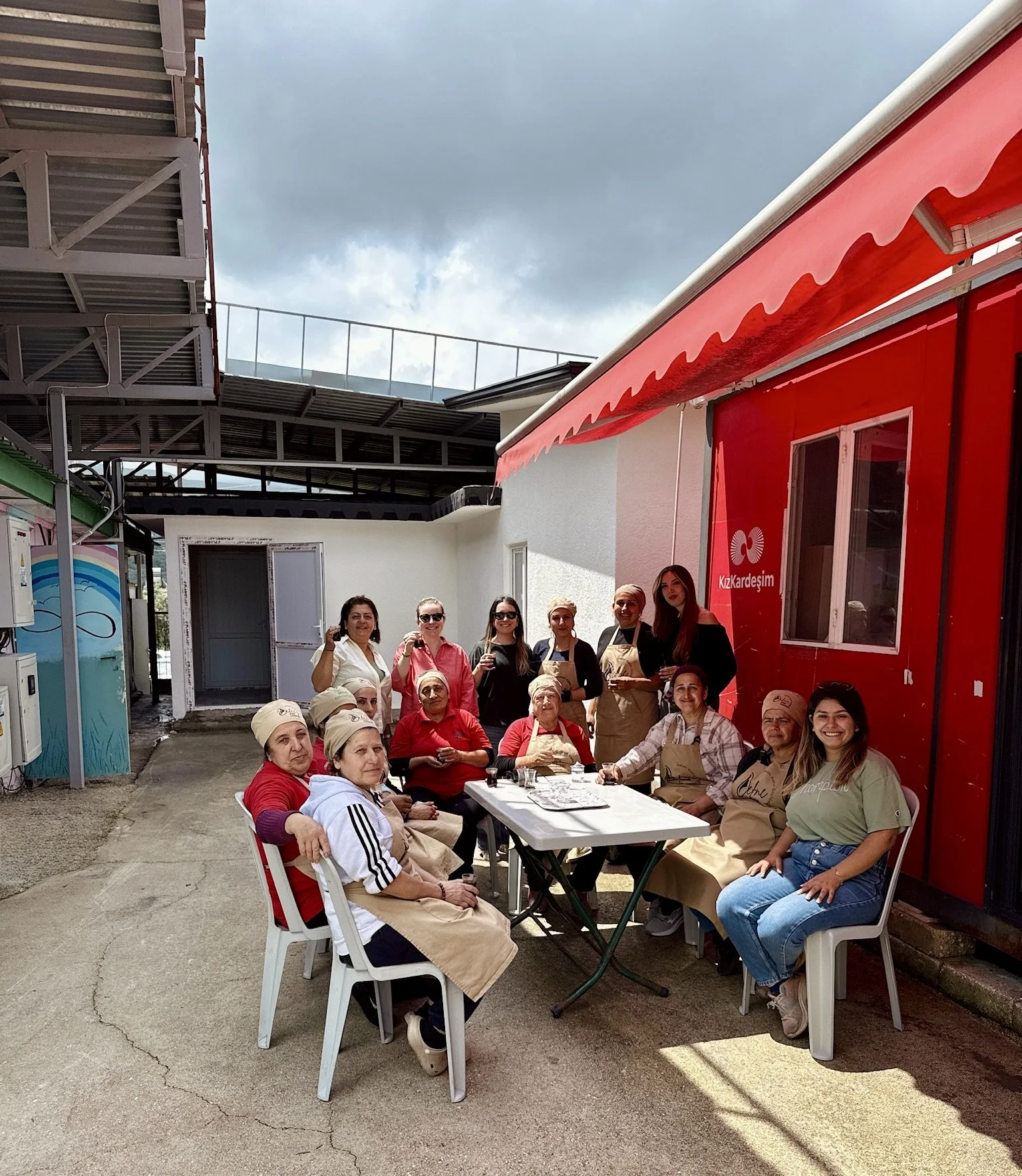
An afternoon Hatay coffee with the women of Defne Women’s Cooperative. Coffee here is roasted twice and drunk in a classic Turkish tea cup
Where ENHANCER comes in
The women already had the vision and the discipline; what they needed was enough machinery to meet demand, and a way to make their name as widely known as their olives. This is where the ENHANCER project came in. ENHANCER helped repair the solar array and funded two machines that changed the daily rhythm: an orange-slicing line that handles a tonne a day where hands managed two hundred kilos, with cleaner sorting, and a bay-oil press that saves roughly a quarter of every batch once lost to the old manual method. Just raising the co-financing was a feat in itself: some forty thousand euros gathered in about twenty days, "3 euro, 5 euro, 10 euro" at a time. They named the bay-leaf line for what it stood for: Reborn through the Bay Tree.
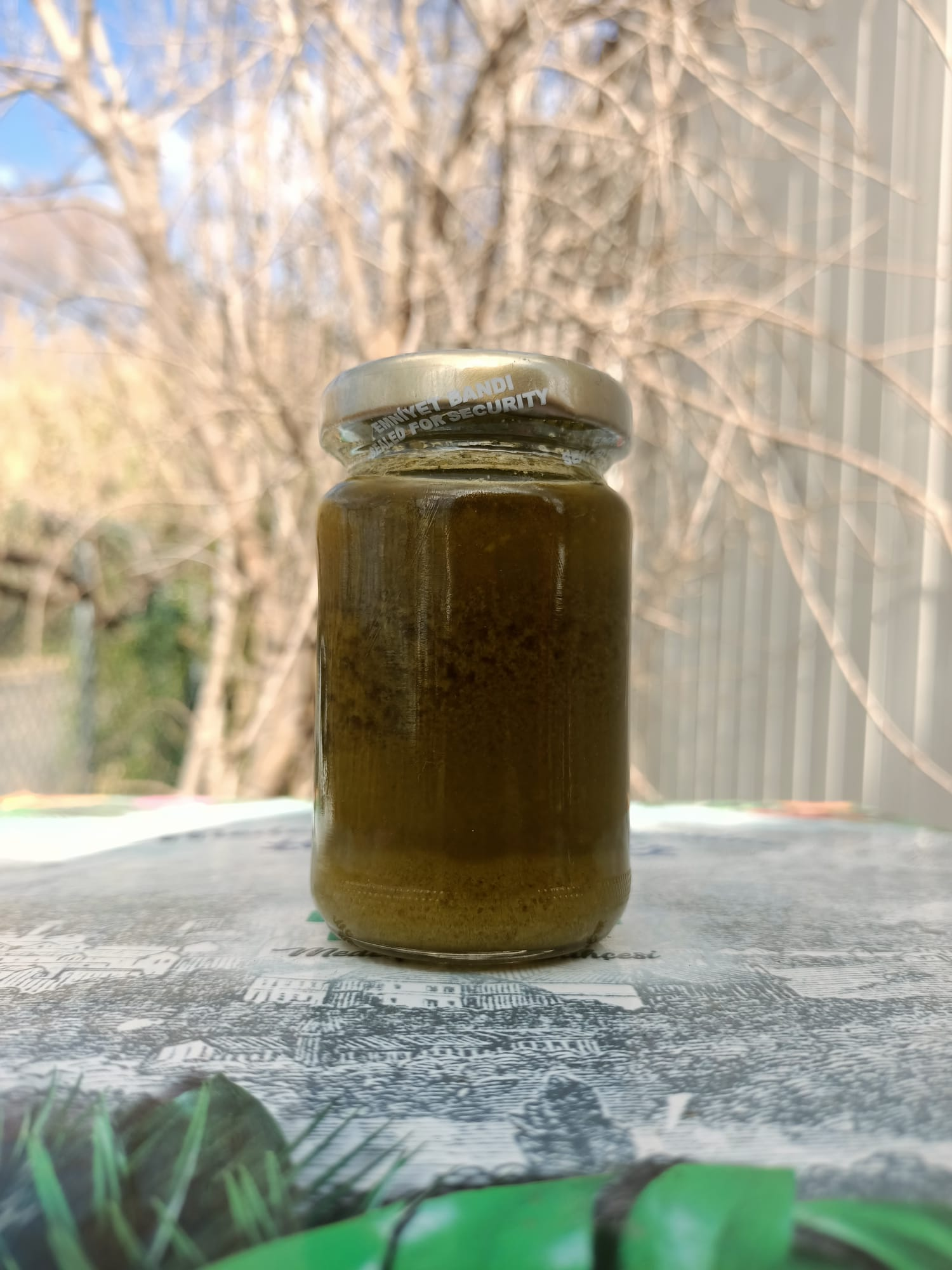
Bay Leaf Oil. Source: defnekoop.org
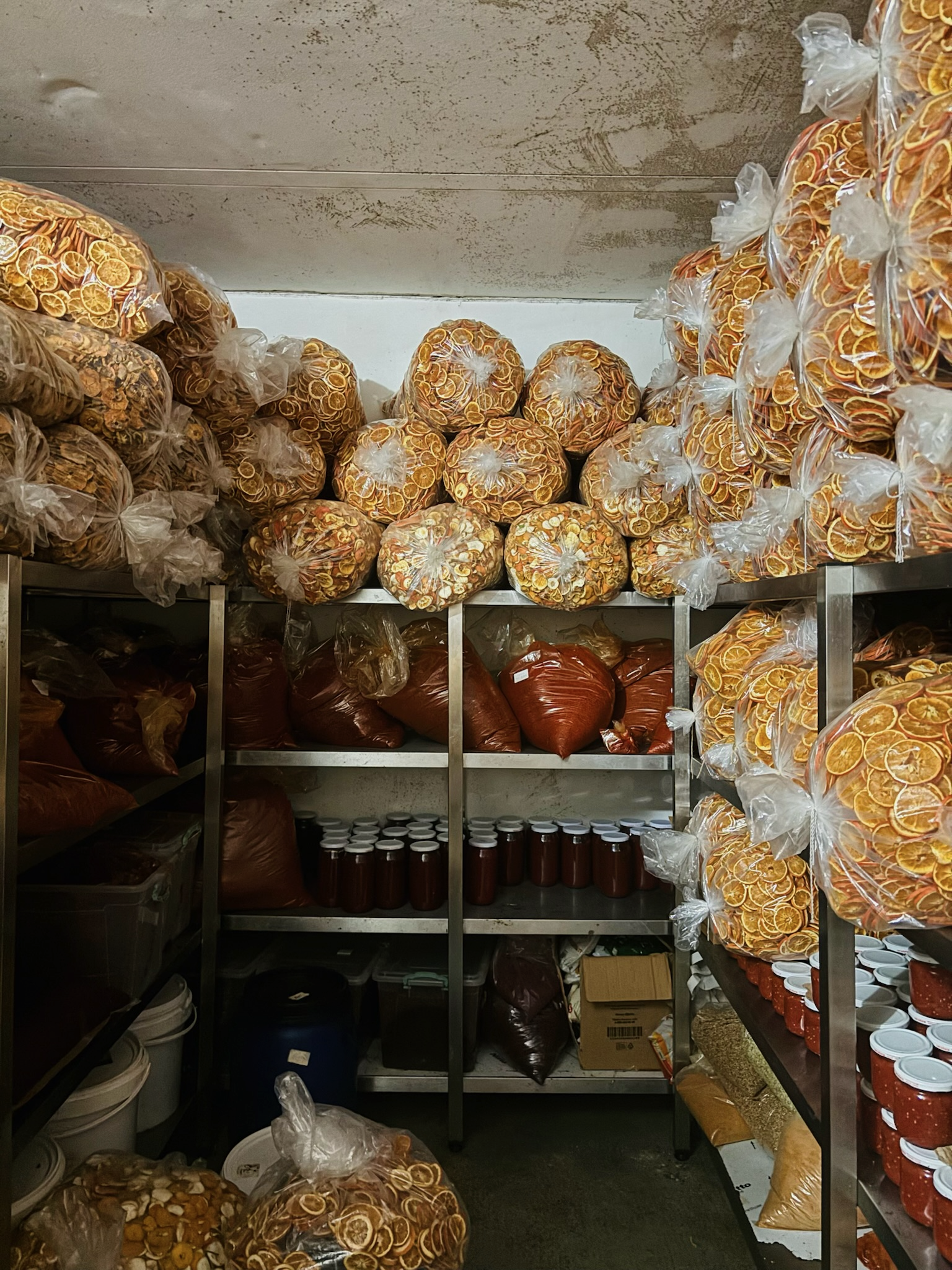
The cold storage facility with a multitude of products
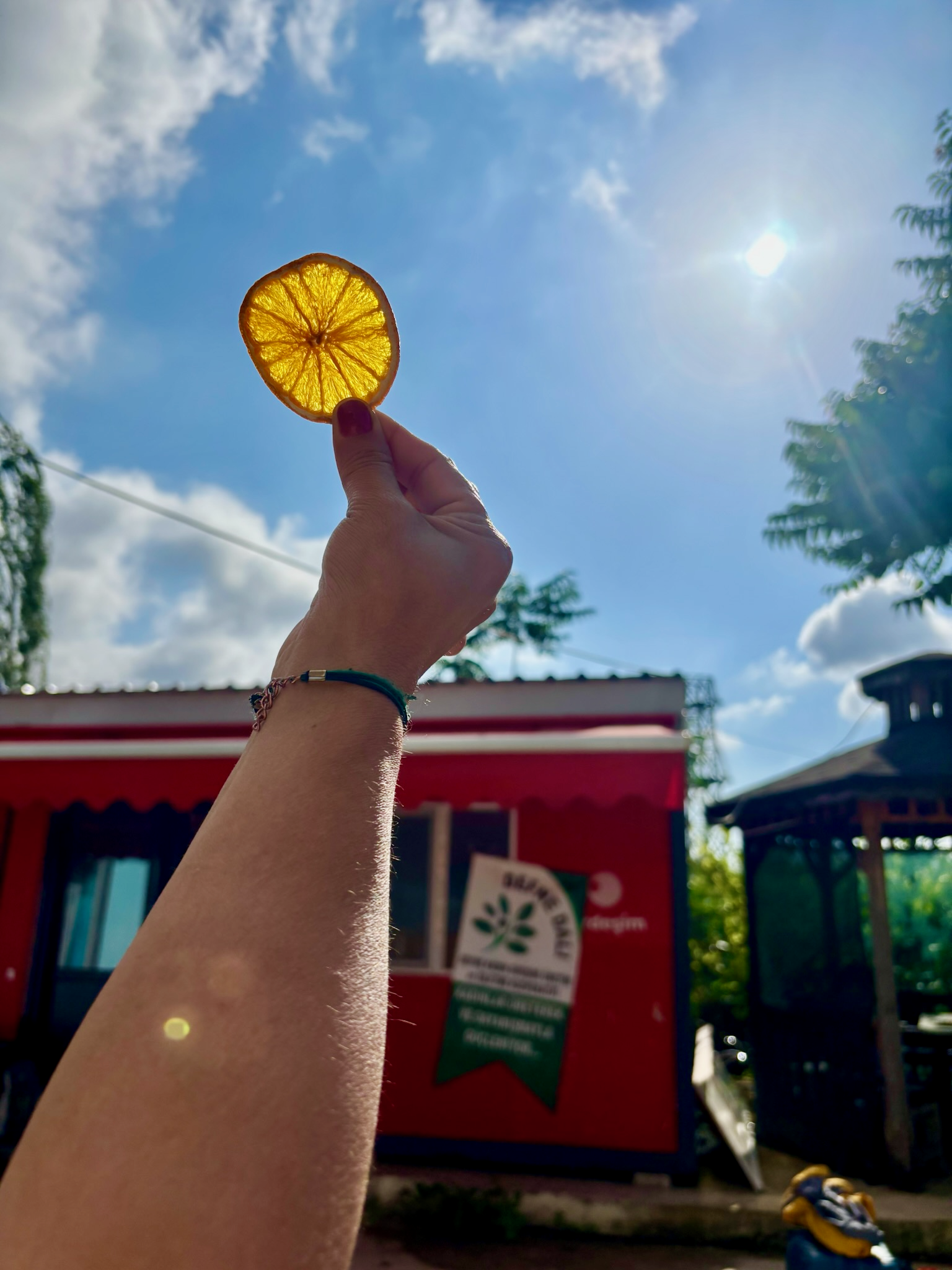
A dried slice of orange being held up to the sun to catch a special colour
What comes next
The cooperative is now registered with the Exporters' Association and pushing to ship under its own name. There is the Halhalı GI to build on, the bay-leaf range to grow, and Nesrin's idea of sister cooperatives (kardeş kooperatifçilik) to keep spreading; she coined it years ago, and it became part of KEDV's own philosophy. Further out is a dream she returns to often: a Defne school, a training space where the next generation of women learn what she had to teach herself. Independence is the thread through all of it. "Kapılarımız hepsine açık, ama hepsinde duvarımız var," she says: our doors are open to everyone, but with everyone we keep a wall — welcoming partners, funders and buyers, yet never letting any of them take the wheel.
Back at the cooperative, the bay tree is everywhere: in the name, in the soap, in the myth of a woman who became a tree to keep herself whole. Defne lost a city's memory in a single morning and has spent the years since refusing to let the rest of it disappear: the old varieties, the unrecorded recipes, the women who were never counted. Gün gelecek, devran dönecek. The wheel she waited on has turned, and this time it is theirs to keep.
With thanks
Our deepest thanks go to the women of Defne Kadın Kooperatifi, who let us into their facility, their kitchen and the history they have fought so hard to keep alive, and who, in the middle of it all, sat us down to Hatay kısırı with vine leaves picked that morning. Our gratitude goes first to Nesrin Deli, whose accidental signature set everything in motion, and to Nahide Mirioğlu, Pelin Kılıç and all the women and younger members now carrying the work forward. With our deepest thanks to Nesrin Deli, Nahide Mirioğlu, Pelin Kılıç, and to all the women and young workers whose labour continues to strengthen the cooperative, for welcoming us into their facility.
We remember with respect Bedia Hanım, a cooperative member who lost her life in the earthquakes of 6 February 2023, and all those we lost in Defne; we share the pain of their loved ones.
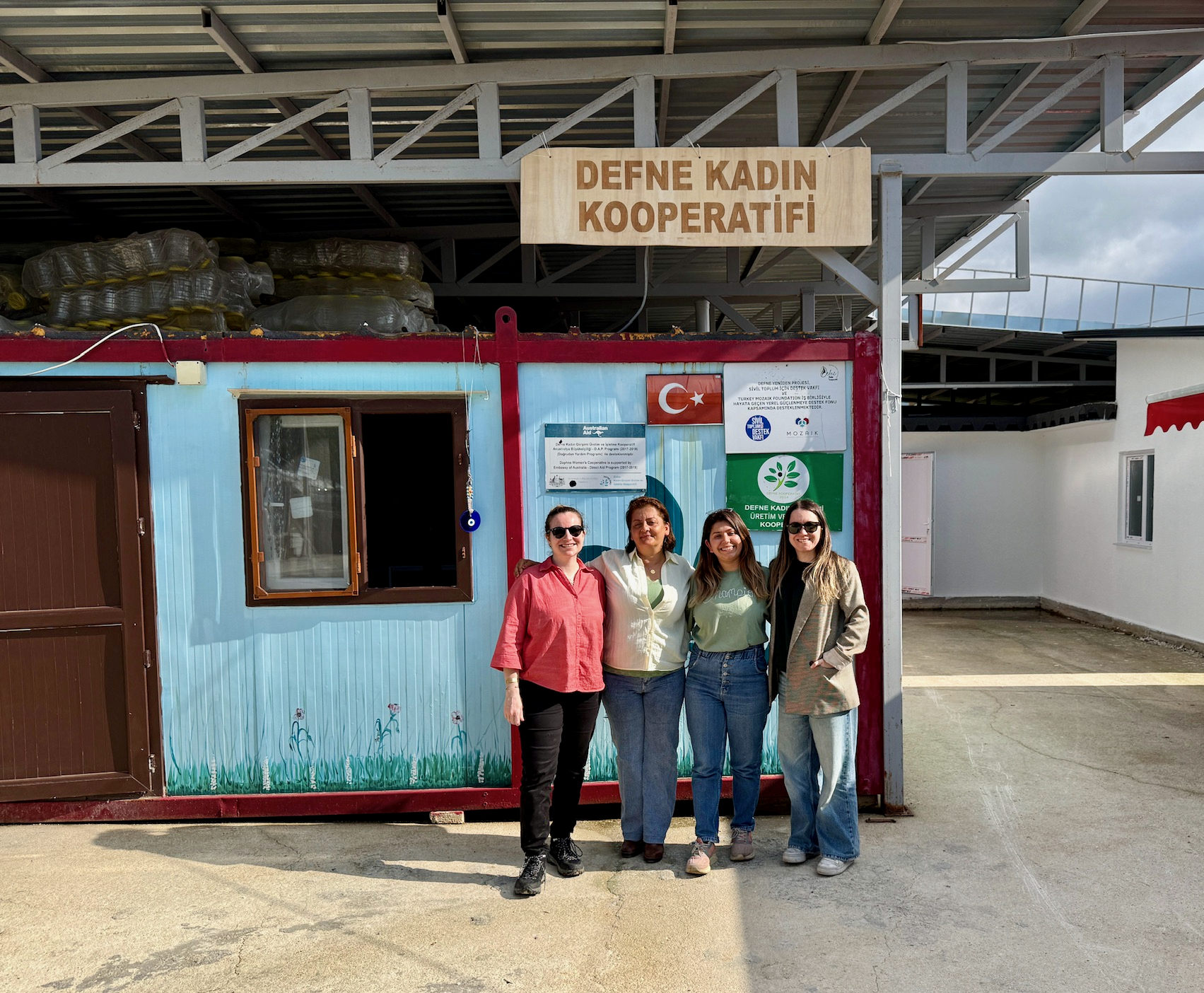
Together in front of the main prefabricated building.
(From left to right: Melissa Clissold, Nesrin Deli, Nahide Mirioğlu, Aylin Yardımcı)
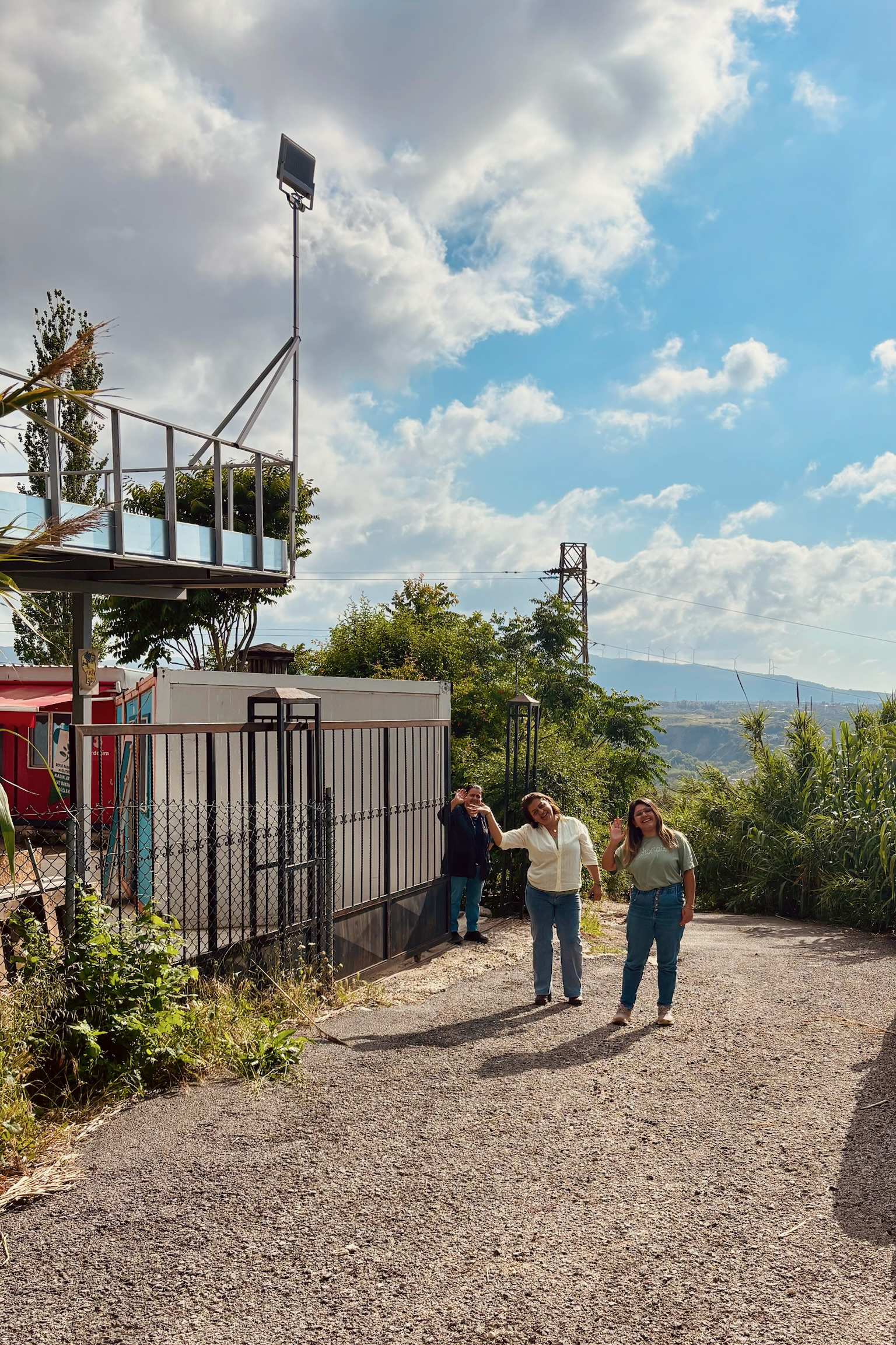
Saying goodbye - until next time!
Where to find them
Defne Kadın Kooperatifi ships across Türkiye and takes orders through their own website and Instagram:
Website: defnekoop.org
Instagram: @defnekooperatifi
This story was created as part of the Enhancement of Entrepreneurship Capacities for Sustainable Socio-Economic Integration (ENHANCER) project, which is funded by the European Union and implemented by the International Centre for Migration Policy Development (ICMPD) in collaboration with the Directorate General of Development Agencies under the Ministry of Industry and Technology of the Republic of Türkiye.
