
The women who brought back the blood orange: Mersinden
How a women's cooperative in Mersin revived a fruit on the edge of extinction and, in the process, rewrote what the women around it believed was possible.
In a village schoolhouse in Hamzabeyli, restored from a ruin and opened only this winter, one of the villagers, Fatma Abla* is explaining how Mersin came to hold the geographical indication (GI) for its blood orange. Someone gently suggests the registration must have come from somewhere above: the city, a ministry, an official desk in Ankara. She won't let it stand. "Yok," she says. "Biz götürdük." No. We took it there ourselves.
It is a small correction, but it holds the whole story.
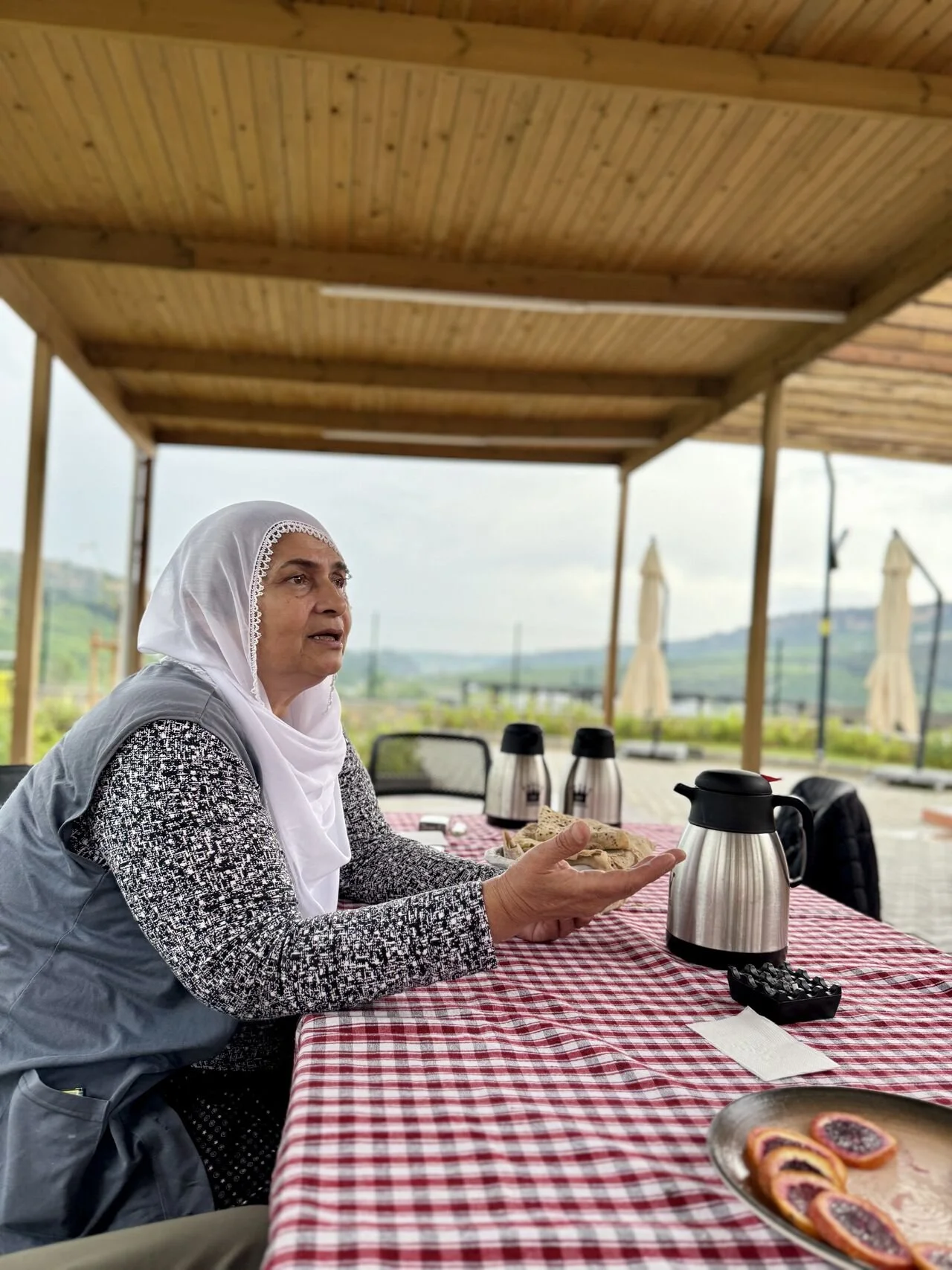
Fatma Abla from Hamzabeyli Village, Mersin. *Abla is an endearing term used in Turkish culture which literally means “sister” - it is used commonly by the young who use it to address those older than themselves.
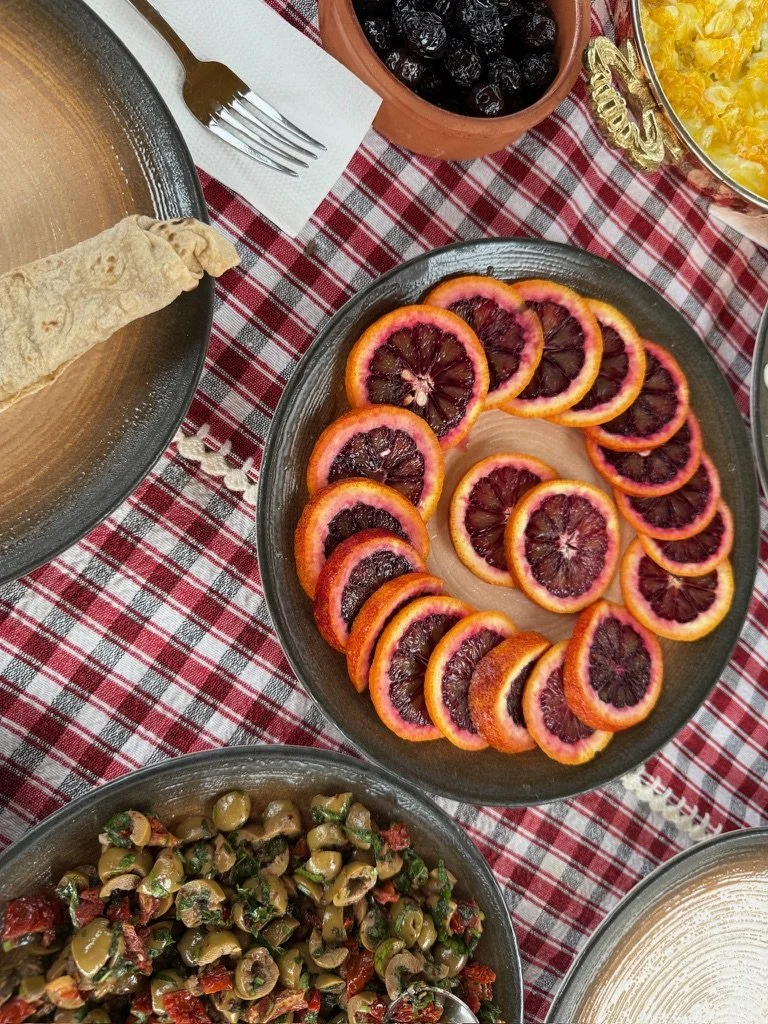
Mersin’s geographically indicated (GI) Blood Orange with other breakfast items from the region
A coast that almost forgot its own fruit
Mersin sits on Türkiye's southern Mediterranean coast, citrus country, where orange groves run almost to the sea. For generations the region grew a deep-red Moro blood orange (kan portakalı) alongside heritage varieties that slowly disappeared as commercial growing favoured fruit that travelled well and ripened on schedule; avocado was one of the newer market pulls. By the time anyone thought to protect it, the blood orange had nearly vanished from the groves that gave it its name.
Eight strangers, one charter
Mersinden, officially the Sınırlı Sorumlu Mersin Kadın Girişimi Üretim ve İşletme Kooperatifi, was founded in the closing months of 2019 by eight women who, for the most part, had never met before. Strangers brought together by the idea of a cooperative, who signed its charter that November, just before the pandemic. Among the founders were Eylem Bozdoğan, who had spent seventeen years in banking before walking away in 2018 and turning to agriculture the following year, and Zübeyde Coşkun, a lawyer with more than fifteen years spent consulting for cooperatives. Today the two of them, with Meral Seçer, lead Mersinden as its three co-chairs. What they built is deliberately hybrid: part production business, part social project, with twelve formal members reaching an estimated four to five thousand women across the province. It has kept producing through hard years since — the pandemic that arrived in its second month, and the 2023 earthquakes that shook the wider region. Eylem and Zübeyde share the work of carrying Mersinden's story to buyers, partners and visitors.
What they set out to overcome was bigger than any single product: how to make rural women's work visible, valued, and paid. Part of that happens face to face, through the Mersin Metropolitan Municipality's Rural Gathering Days (Kırsal Buluşma Günleri), which bring city women together with rural producers — gatherings Mersinden regularly helps lead.
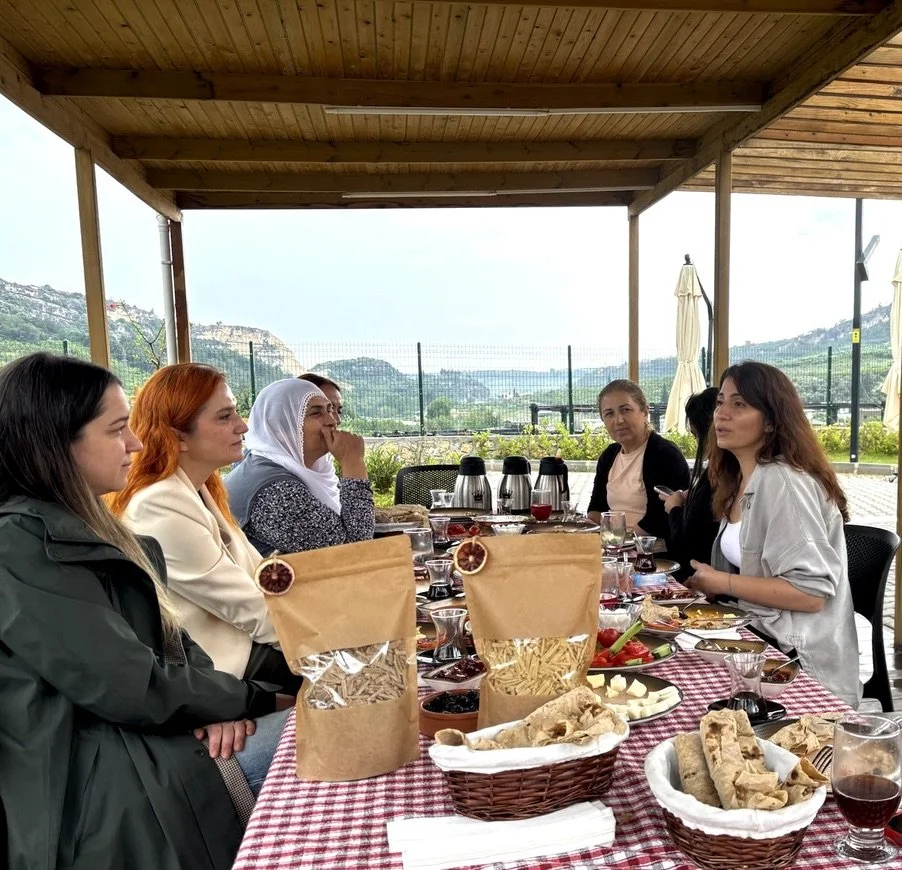
Breakfast at Hamzabeyli Village with Co-Chairs Zübeyde Coşkun, Eylem Bozdoğan, and other women of the village.
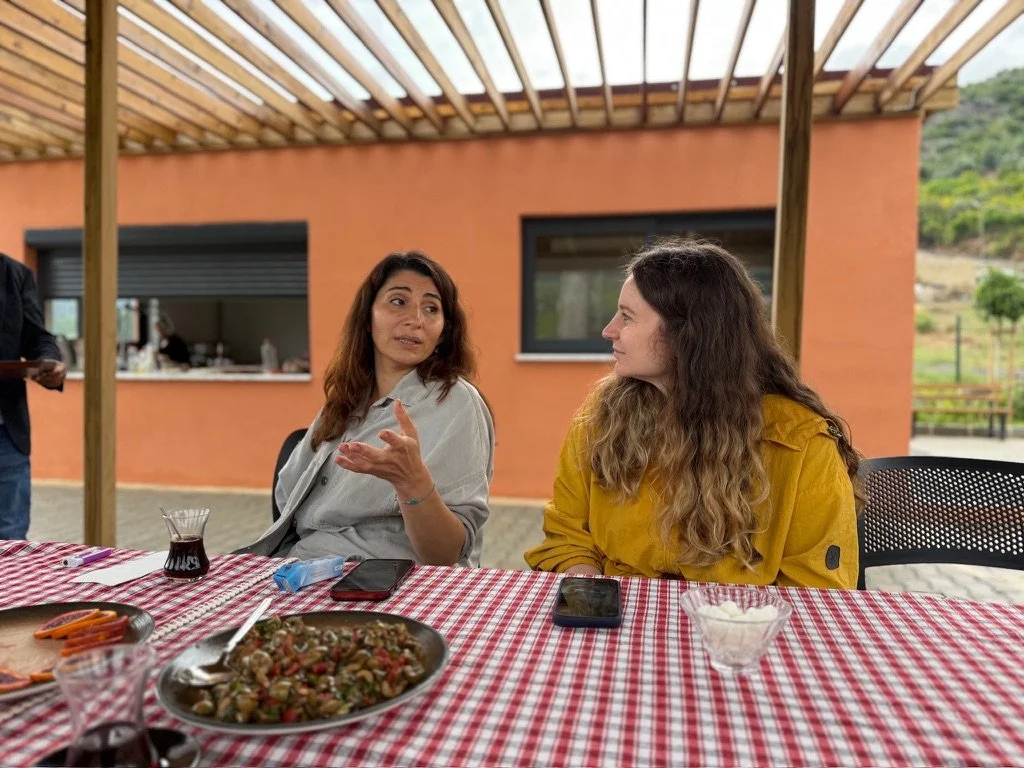
Discussions at the breakfast table
From a saved fruit to a national shelf
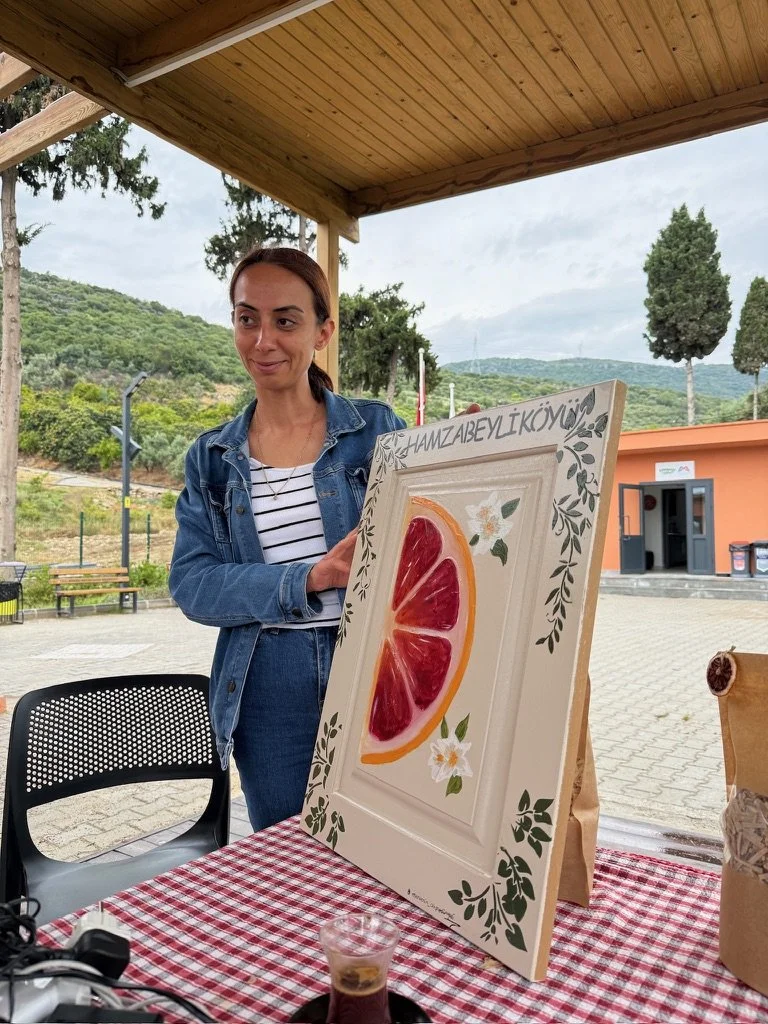
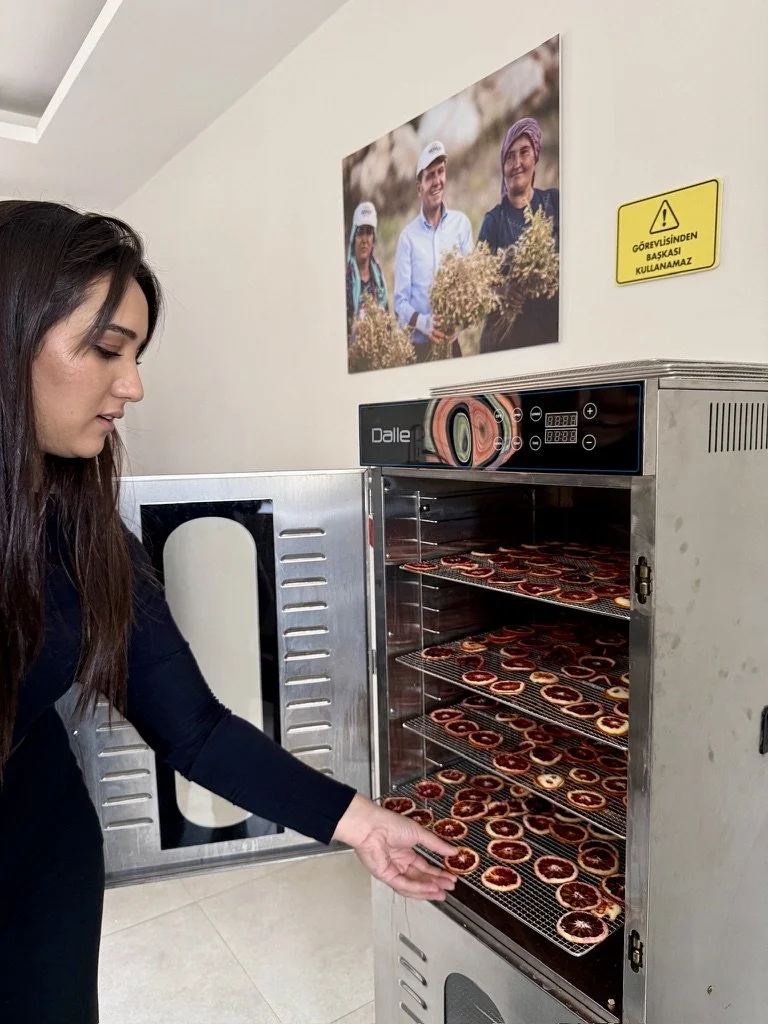
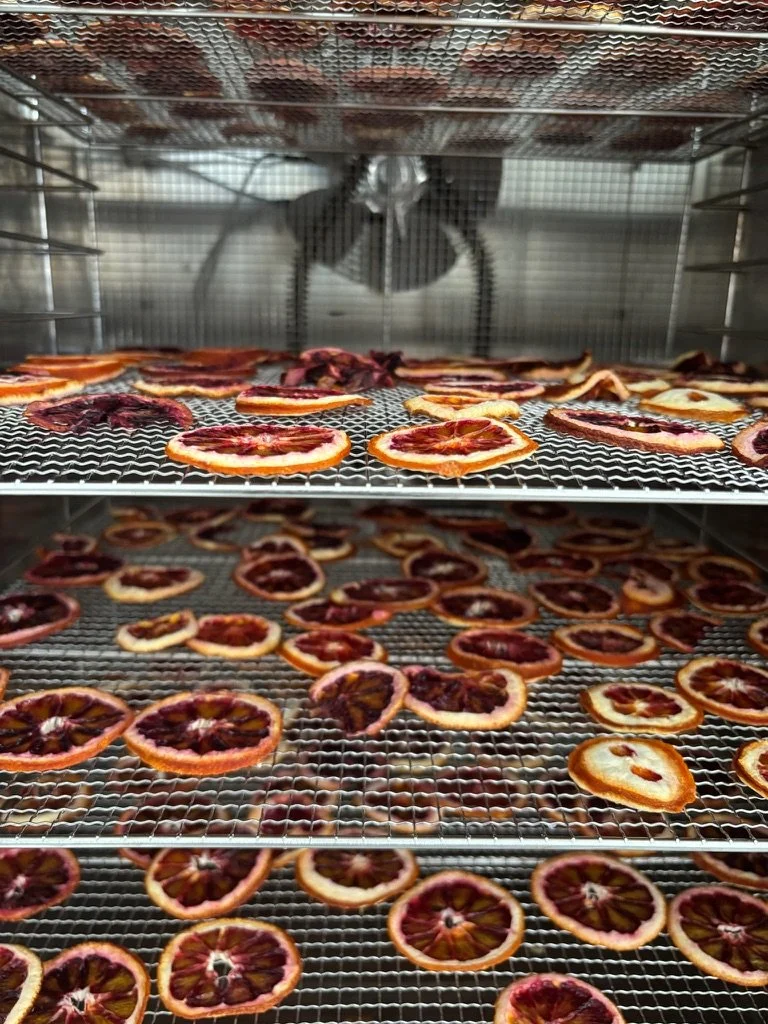
The turning point was the blood orange. Over a two-year process the cooperative revived the near-extinct Moro variety and, in July 2024, secured its official geographical indication (GI). "Coğrafi işaret her şeyi değiştirdi," as the team puts it: the GI changed everything. Metro Türkiye signed a full off-take guarantee under its In the Steps of Locality (Yerelin İzinde) programme, turning the harvest into a Metro Chef blood-orange juice and pointing national demand back toward Mersin. The proof came the very next season. "Ertesi sene kurutmak için kan portakalı bulamadık," Zübeyde says — the year after the GI, the cooperative couldn't find any blood oranges left to dry, because the farmers had already sold the whole crop. Growers who had once pulled out their blood orange trees in favour of avocado started putting them back in the ground. Around it the cooperative built an unusually broad catalogue: dried blood orange, red lemonade (kırmızı limonata), jams and lokum, single-flower orange-blossom honey, Silifke's heirloom yellow cracked wheat (sarı bulgur), Gülnar chickpeas, Sarıulak olive oil, and the needle lace (iğne oyası) of Tarsus and Çamlıyayla. All told, more than 170 products span local foods, dried goods, aromatic herbs, textiles, natural care and corporate gifts, now sold online — much of it dried at the cooperative's FSSC-certified solar drying facility, where roughly half the energy comes from the sun.
Some lines have scaled fast: working with the Bahri Dağdaş research institute, the cooperative grew its Silifke yellow-wheat bulgur from 13 producers in 2021 to around 130 producers and some 350 tons by 2024. The work is spread across several dedicated sites around Mersin, each led by its own specialists. The drying facility; a flower greenhouse where the women raise seasonal blooms, succulents and aromatic plants (lavender, basil) into arrangements sold through the Chamber of Commerce, the municipality, Migros, Metro and Macrocenter; and the cooperative's Mersin Dokuma textiles, which include a needle-lace collection sold as the Mother's Love (Anne Sevgisi) series.
But the deepest change is harder to put in a catalogue. In the Our Home is Our Workshop (Evimiz Atölye) model, women turned their own homes into workshops, stitching discarded socks into children's toys. For many, it was the first income of their own, and the first shift in standing at home, in more than 50 neighbourhoods. The new Our Village is a Workshop (Köyümüz Atölye) in Hamzabeyli Village, run with the Mersin Metropolitan Municipality, takes that further: the municipality provides the restored space, equipment and training; the cooperative brings the women and the route to market.
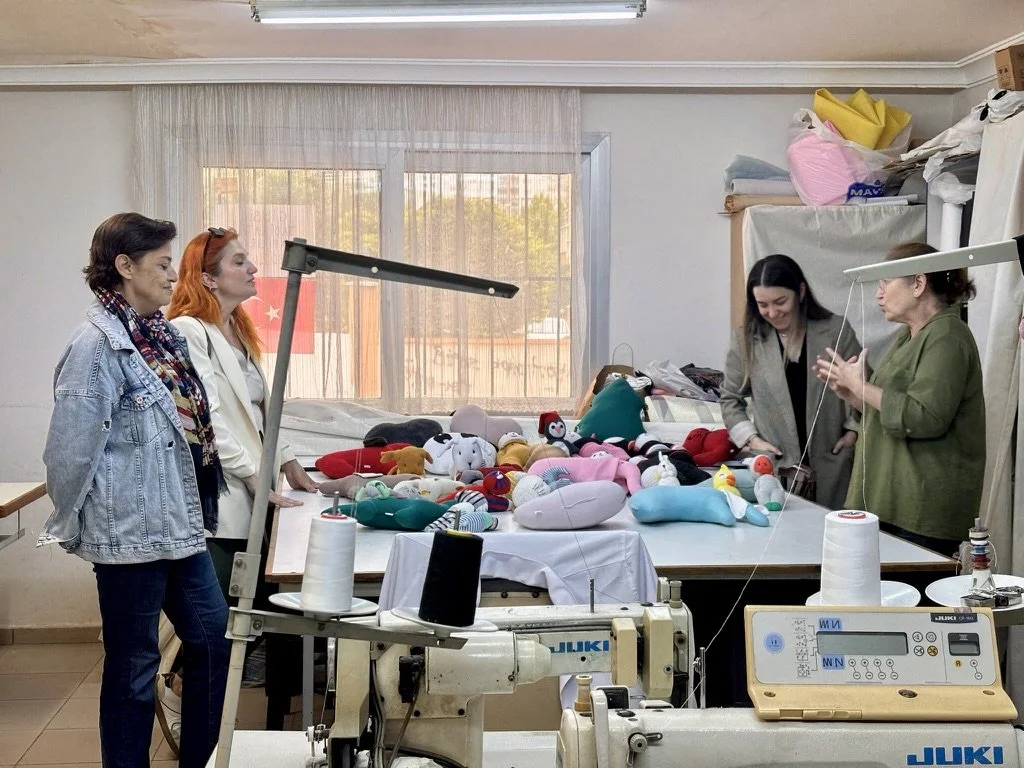
Mersinden’s Textile Workshop
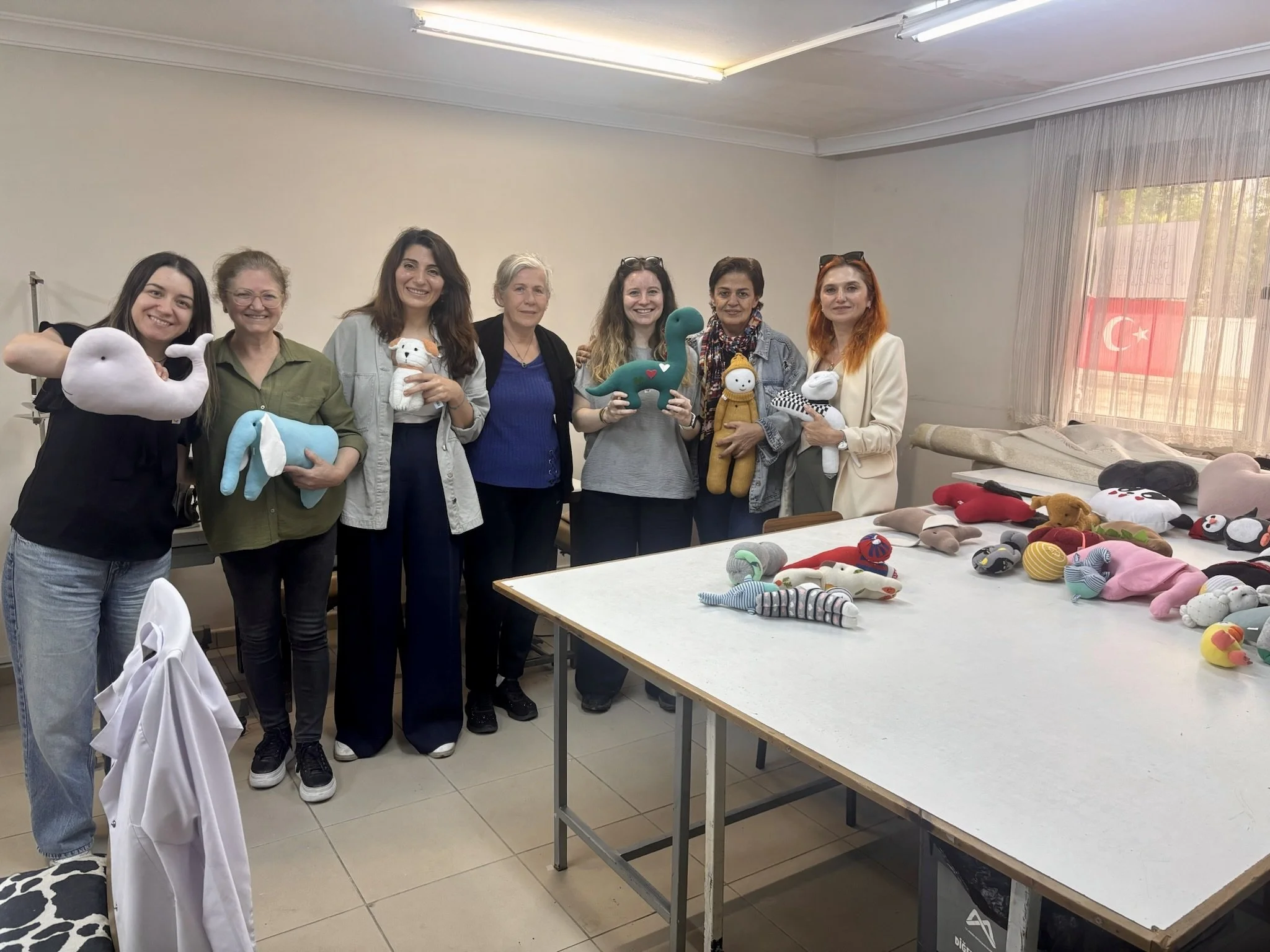
The women of the textile workshop with their upcycled toys made from socks. Aylin Yardımcı, Ayşe Başar, Eylem Bozdoğan, Ayşe Dağcı, Melissa Clissold, Müge Erdin, Zübeyde Coşkun (From left to right)
Eylem describes one of them:
"She used to work alongside the people who hired her to bake bread. Now look, Fatma Abla is explaining her plan for how she'll run her own business. That, really, is the difference."
There is Merve Demir, too: two young children, unable to work outside the village, now painting wood and making noodles (erişte) without leaving home.
Where ENHANCER comes in
Two things stood between the cooperative and its next chapter: the capacity to dry and process far more than it could already, and a clearer way to carry what it had already built to the wider world. That is where support through the ENHANCER project arrived, funding the three drying ovens now at the heart of the production line, and helping build a corporate identity, a social media strategy and the e-commerce and agency partnerships that carry the products beyond the local market. It was through this same ENHANCER-linked work at the drying facility that the cooperative also brought Syrian women under temporary protection into production — a real step toward the shared, dignified livelihoods the project set out to build.
"Enhancer'la başladık," the team says simply: we started with ENHANCER.
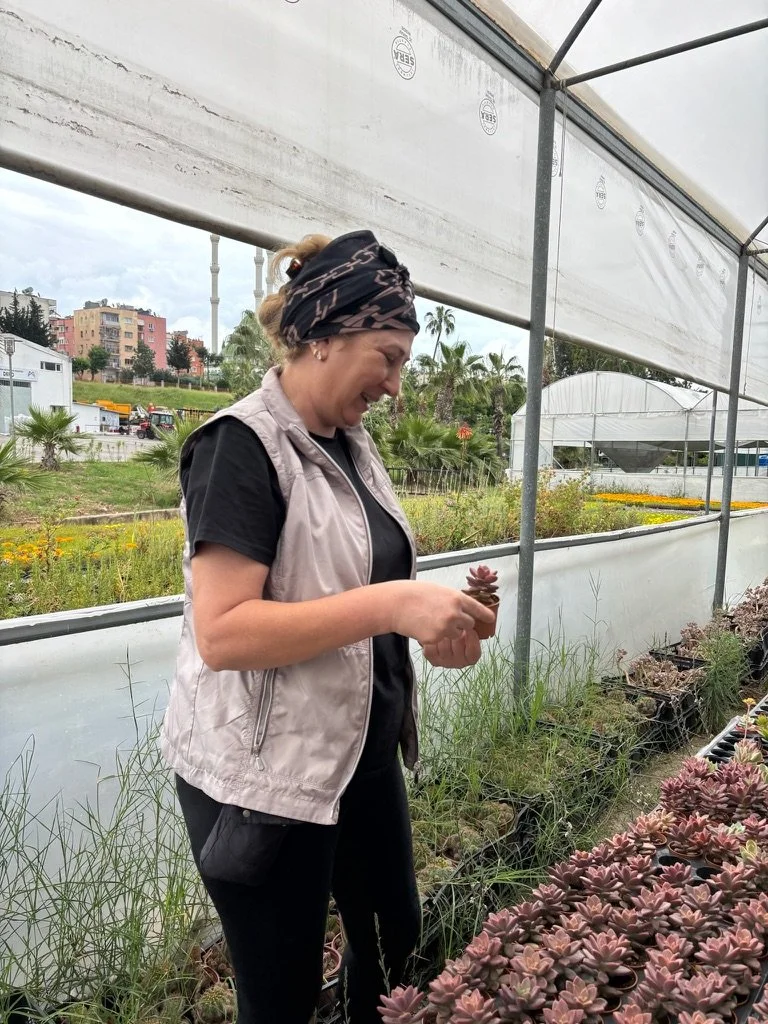
Sibel Yıldırım, one of the cooperative members who works at the greenhouse
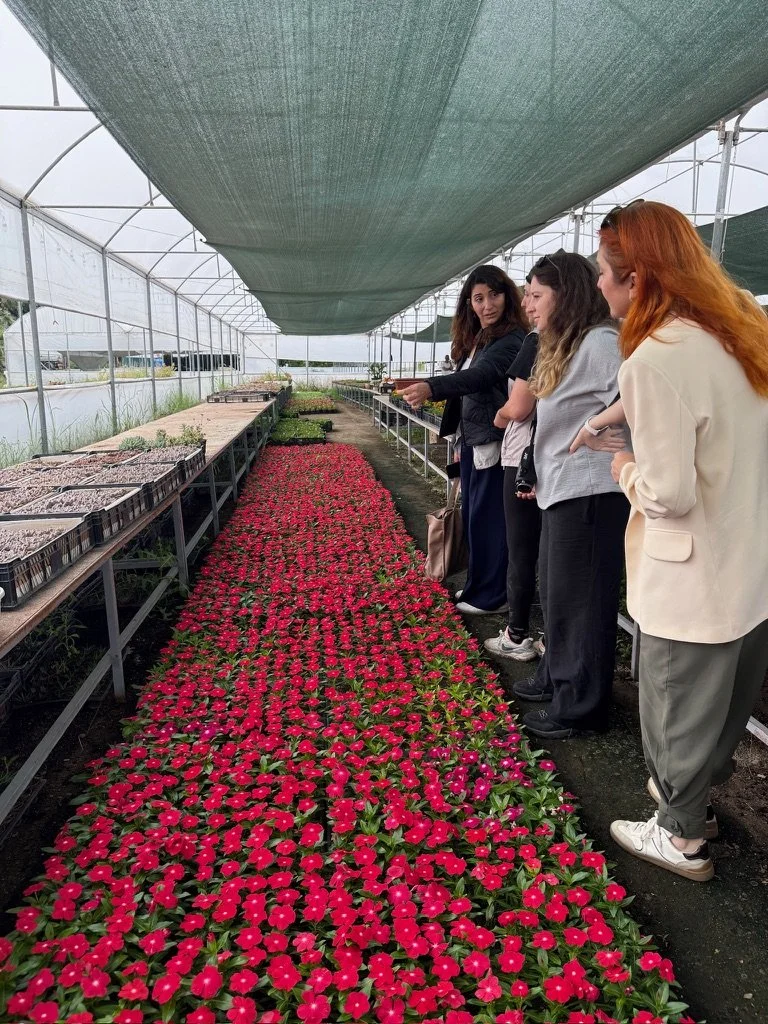
The Greenhouse where a multitude of flowers and plants are grown to be sold to the municipality and beyond
What comes next
The ambitions point outward now: pursuing EU-level GI recognition for the blood orange, scaling the Köyümüz Atölye model village by village, and opening export channels for the products they believe travel best: dried fruit and Mersin's woven textiles.
What stays with you is a room full of women who no longer wait for someone above to decide what is possible. “Biz götürdük” — they took it there themselves, and the impact is theirs.
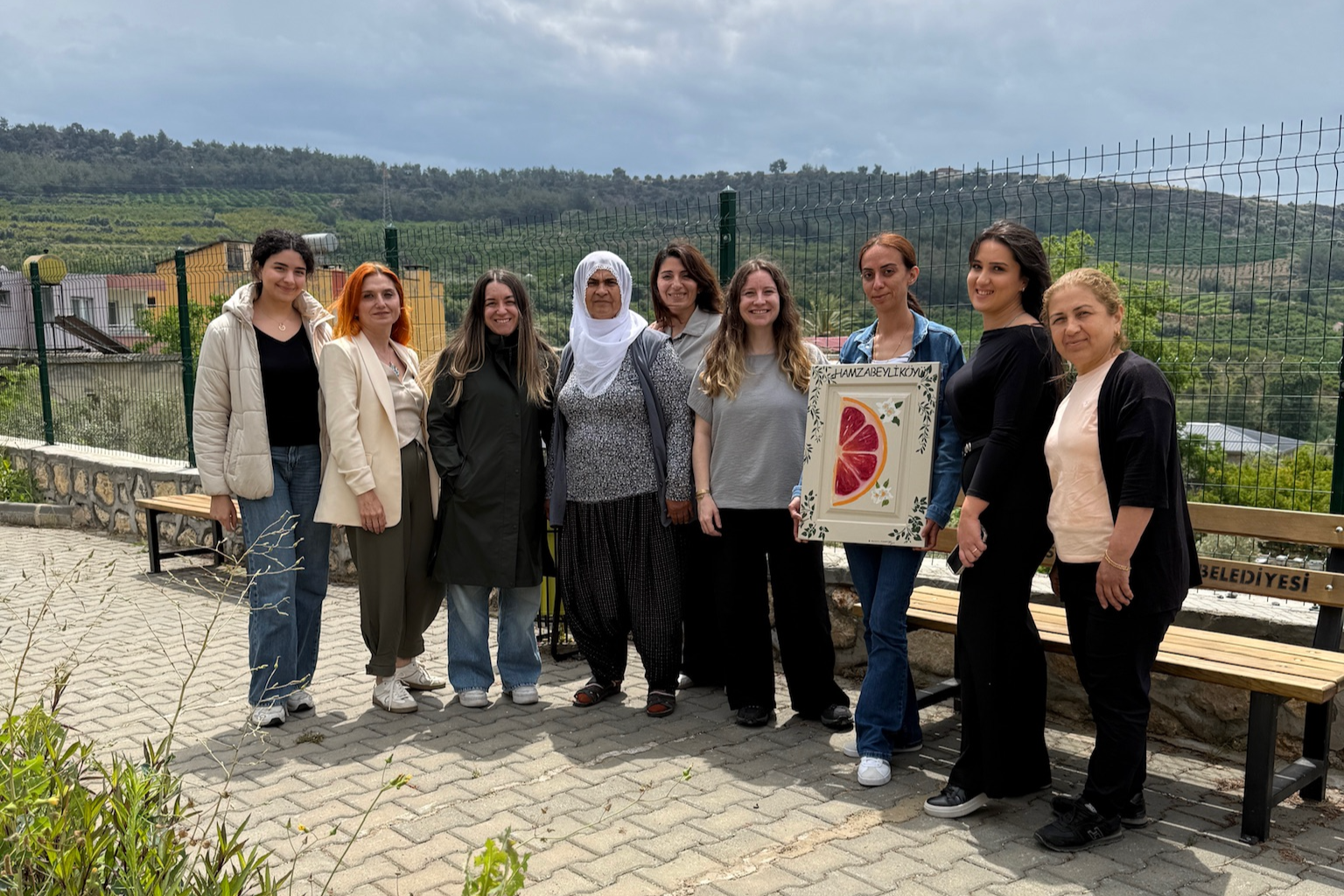
Hamzabeyli Village 20.05.26 - Cemre Bozdoğan, Zübeyde Coşkun, Aylin Yardımcı, Fatma Erdoğan, Eylem Bozdoğan, Merve Demir, Saadet Erdoğan (From left to right)
With thanks
None of this story would exist without the women of Mersinden, who showed us their groves, their drying rooms and the work behind every jar: to Eylem Bozdoğan, whose leap from banking into the fields set so much of this in motion; to Zübeyde Coşkun, the lawyer and longtime cooperative consultant who, with Eylem, walked us through the cooperative's world; and to Meral Seçer, a co-chair who could not be with us on the day but whose leadership steers the work. And to Fatma Abla, Merve Demir and all the producers of Hamzabeyli, who welcomed us with a slow breakfast and an afternoon of stories. Thank you, above all, for the blood orange — and for setting us straight on who really brought it back.
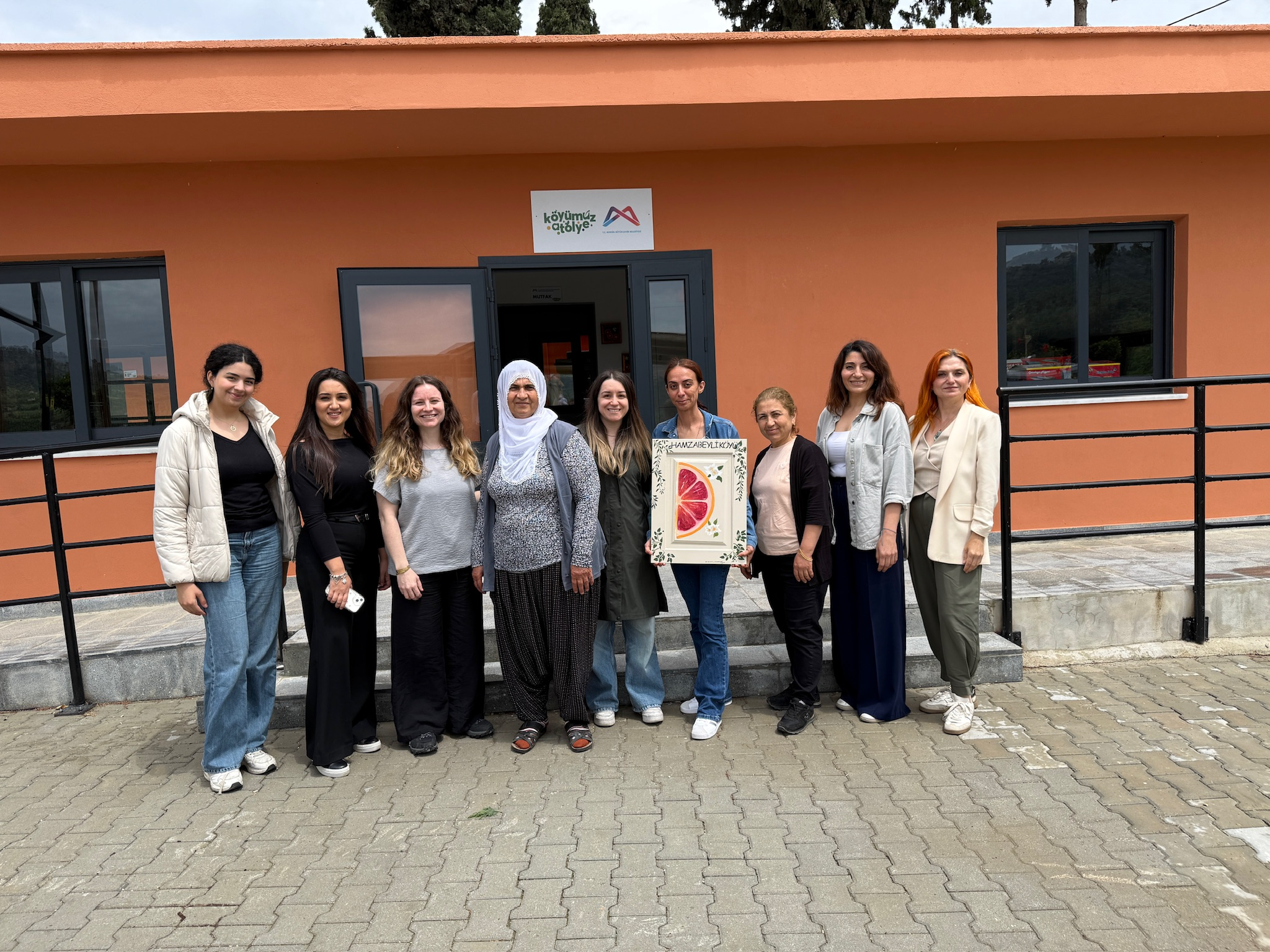
A snapshot in front of the “Our Village is a Workshop” building gifted by the municipality of Mersin
Where to find them
Mersinden ships across Türkiye and takes orders through their Website and Instagram. They will soon be shipping abroad:
Website: mersinden.com.tr
Instagram: @mersindenkadinkoop
This story was created as part of the Enhancement of Entrepreneurship Capacities for Sustainable Socio-Economic Integration (ENHANCER) project, which is funded by the European Union and implemented by the International Centre for Migration Policy Development (ICMPD) in collaboration with the Directorate General of Development Agencies under the Ministry of Industry and Technology of the Republic of Türkiye.
